Treatment Hub, Pardon Support, Prison Mentoring and Transitional Housing

I HAVE A DREAM SPEECH 

This is an audio recording of Dr. Martin Luther King Jr. giving the "I Have a Dream" speech during the Civil Rights rally on the steps at the Lincoln Memorial in Washington D.C. on August 28, 1963


Martin Luther King Jr. and Martin Luther: The Parallels Between the Two Leaders

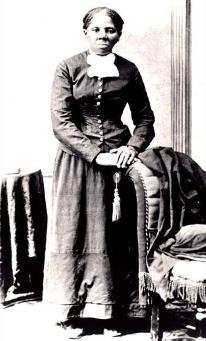
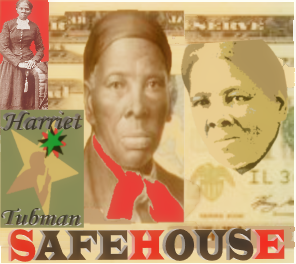
Harriet Tubman
1820? to March 10, 1913

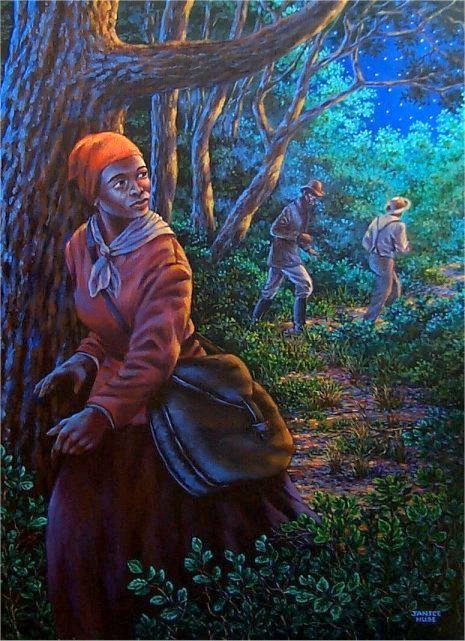
Of all the names associated with the Underground Railroad, Harriet Tubman's is the most legendary. Called the black "Joan of Arc," she is credited with personally escorting three hundred slaves to freedom on more than twenty separate missions. Such missions entailed hundreds of miles of walking, navigating through rough terrain, outwitting professional slave catchers and evading hunting dogs. An abolitionist of the nineteenth century. Born a slave on a Maryland plantation, then became an escaped slave herself. She escaped to the North in 1849 via the Underground Railroad. She became the most renowned conductor of its time. During the Civil War, she served as a nurse, scout, and spy for the Union army. Believing herself guided by God on her missions, Tubman and her 100% success rate made her a legend. Prior to and during the Civil War, a $40,000 reward was offered for her arrest. Tubman settled in Auburn, New Yo
rk and died there in 1913.

AUGUST QUARTERLY

The “Big Quarterly” known today as the “August Quarterly” is the oldest continuous celebrated African Festival in the nation, first celebrated in 1814 and every year since.  Pastor Jimmie Knox from Mother African Union Church 800 block of French St.  He purchased his own freedom.  He founded the Union Church of African  Members.  There were delegates from 600 churches representing more than 25,000 members from the USA and Canada.  They assembled annually in Wilmington during the last weekend in August.The PA Railroad built was built in 1881 at the Riverfront on South Market Street and Rosa Parks Drive.  The Underground Railroad conductors were 

John Hunn and Samuel D. Burris. 

Beethoven, the Most Famous Classical Musician of All Time, Was... a Black Man!

Ludwig Van Beethoven as a Black man

Ludwig Van Beethoven is arguably the most famous and well known classical musician and composer in all of history, but his true identity and ethnicity has been a falsehood and obscurity for many, many years. Society has depicted him as a white male with either blonde or brunette colored hair, being shown in drawings, paintings, and illustrations all over the world.

But in reality, Beethoven was labeled by many as a “Mulatto”, or “Black Spaniard”. But why? Well, according to Gabriel Scott, historian and author of The Chosen Ones: Perception of Malcolm and Martin, his father was a white German and his mother was a “Moor”.


At the time, the term “Moors” was used to refer to a group of Muslim Northern Africans... or generally speaking, people who were of African descent or even Negros. In society, with the Black gene being the most dominant, he was referred to as a Black man often by his friends and people that he associated with. In fact, several people are documented as saying that he had brown skin, black frizzy-wooly hair, a thick-wide nose and a short neck.

Some resources like Gabriel Scott, a respected lecturer and historian, claim that Beethoven was often forced and/or pressured to wear white powder on his face to hide his ethnic origin when out in public. He allegedly also used body doubles for portraits, and “euro-centric” historians, hiding the truth of his genetic heritage.

Nevertheless, Beethoven's story is very interesting and inspirational. At the young age of 21, he moved from Germany to Italy and began studying composition and quickly gained a reputation as a virtuoso pianist. However, during his late 20's, his hearing began to deteriorate, and he eventually became almost completely deaf.

But his disability did not end his music career. In fact, during the last 15 years of his life, he composed and published many of his most admired works in classical music. All in all, his compositions include nine symphonies, about a dozen pieces of "occasional" music, seven concerti, as well as four shorter works that include soloists accompanied by orchestra. His only opera was Fidelio.
But most interesting is that this musical genius who people have thought for centuries was a white man, was actually in fact... Black.
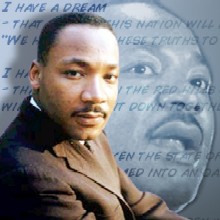
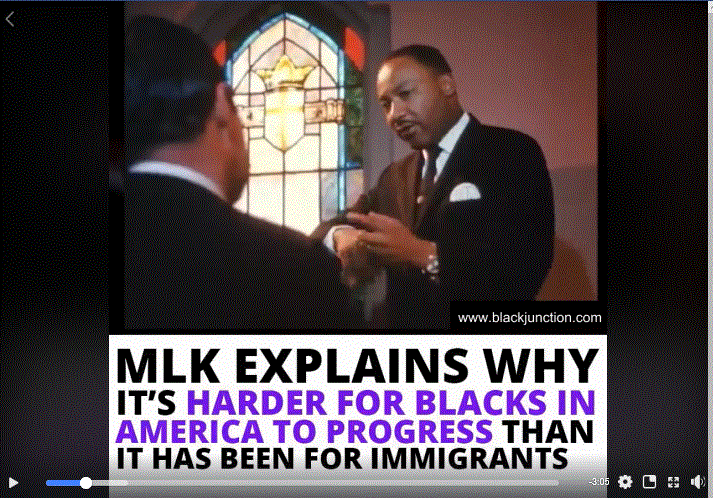
Martin Luther King Jr talks about Gandhi (see video)


READ MORE: How Martin Luther King Jr. Took Inspiration From Gandhi Nonviolence

Inspiring Quotes by Martin Luther King Jr.

THE LIFE OF Harriet Tubman


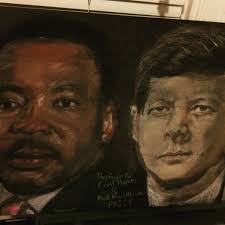
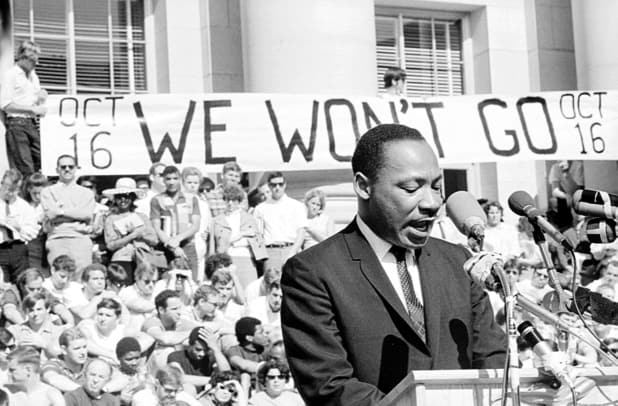
An African-American clergyman and political leader of the twentieth century; the most prominent member of the civil rights movement. King became famous in the 1950s and 1960s through his promotion of nonviolent methods of opposition to segregation, such as boycotts of segregated city buses, or sit-ins at lunch counters that would not serve black people. His “ Letter from Birmingham Jail” defended this kind of direct, nonviolent action as a way of forcing people to take notice of injustice. King helped organize the march on Washington in 1963 that drew hundreds of thousands of supporters of civil rights to Washington, D. C., for a mass rally. At this march, he described a possible future of racial harmony in his most famous speech, which had the refrain “ I have a dream.” In 1964, he received the Nobel Prize for peace. King was assassinated by James Earl Ray in 1968. 

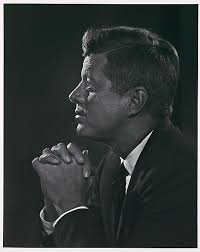
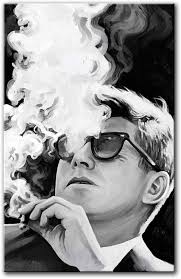
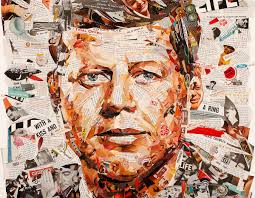
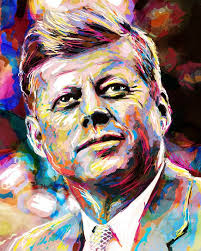
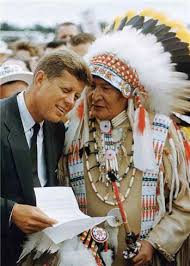
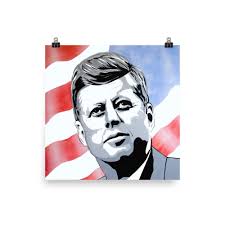
At age forty-three, Kennedy was the youngest person to be elected president in American history. A Democratic party political leader of the twentieth century; he was president from 1961 to 1963. In his inaugural address, he challenged the nation, "Ask not what your country can do for you; ask what you can do for your country." He strongly supported space exploration and the civil rights movement.
In 1963, demands by African Americans for equal civil and economic rights increased.  Racial protests and demonstrations took place all over the United States.  On August 28, 1963 more than 200,000 people staged a freedom march in Washington D.C. to demonstrate their demands for equal rights for blacks.  Kennedy asked Congress to pass legislation requiring hotels, motels, and restaurants to admit customers regardless of race.  He also asked congress to grant the attorney general authority to begin court suits to desegregate schools on behalf of private citizens unable to start legal action themselves.

http://www.biography.com/feat

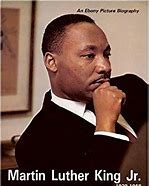
Martin Luther King Jr. Biography

(1929–1968)

Martin Luther King Jr. was a scholar and minister who led the civil rights movement. After his assassination, he was memorialized by Martin Luther King Jr. Day.

Who Was Martin Luther King Jr?

Martin Luther King Jr. was a Baptist minister and civil-rights activist who had a seismic impact on race relations in the United States, beginning in the mid-1950s. 

Among his many efforts, King headed the Southern Christian Leadership Conference (SCLC). Through his activism and inspirational speeches, he played a pivotal role in ending the legal segregation of African-American citizens in the United States, as well as the creation of the Civil Rights Act of 1964 and the Voting Rights Act of 1965. 

King won the Nobel Peace Prize in 1964, among several other honors. He continues to be remembered as one of the most influential and inspirational African-American leaders in history.

Early Life

Born as Michael King Jr. on January 15, 1929, Martin Luther King Jr. was the middle child of Michael King Sr. and Alberta Williams King. 

The King and Williams families had roots in rural Georgia. Martin Jr.'s grandfather, A.D. Williams, was a rural minister for years and then moved to Atlanta in 1893. 

He took over the small, struggling Ebenezer Baptist church with around 13 members and made it into a forceful congregation. He married Jennie Celeste Parks and they had one child that survived, Alberta. 

Martin Sr. came from a family of sharecroppers in a poor farming community. He married Alberta in 1926 after an eight-year courtship. The newlyweds moved to A.D.'s home in Atlanta.

Martin Sr. stepped in as pastor of Ebenezer Baptist Church upon the death of his father-in-law in 1931. He too became a successful minister and adopted the name Martin Luther King Sr. in honor of the German Protestant religious leader Martin Luther. In due time, Michael Jr. would follow his father's lead and adopt the name himself.

Louis Lorenzo Redding

(Oct. 25, 1901–Sep. 28, 1998)

He was a prominent lawyer and civil rights advocate from Wilmington, Delaware. Redding, the first African American to be admitted to the Delaware bar in 1929. He is a Pioneer in the struggle for equality and tireless advocated in Civil Rights cases. He successfully represented victims of Racial Discrimination in a series of Landmark cases. He gave a new meaning to the concept of equality under the law. In 1950, courts of Delaware Parker vs. University of Delaware established the rights to an unsegregated college.  


In 2009, the Redding House Foundation opened the Redding House Museum in his childhood home in Wilmington. 


Summary of the John F. Kennedy Biography
John F. Kennedy (1917–1963), the 35th President of the United States, rose from a prominent Boston political family to become one of the most iconic leaders in American history. The document notes that “Kennedy faced a number of foreign crises, especially in Cuba and Berlin, but managed to secure such achievements as the Nuclear Test-Ban Treaty and the Alliance for Progress.”

Early Life & Education
Kennedy was born into wealth and political influence, raised in a fiercely competitive household led by his ambitious father, Joseph Kennedy Sr. Despite chronic illness and inconsistent academic performance, he developed strong interests in history and politics. His Harvard senior thesis on Britain’s unpreparedness for WWII became the bestselling book Why England Slept.

Military Service
During WWII, Kennedy commanded PT-109 in the South Pacific. After his boat was destroyed, he heroically led survivors to safety, earning the Navy and Marine Corps Medal. His older brother Joe Jr., originally expected to be the family’s political star, died in combat—shifting the family’s presidential hopes onto John.

Political Rise
Kennedy served three terms in the U.S. House, then won a U.S. Senate seat in 1952. He married Jacqueline Bouvier in 1953 and later won a Pulitzer Prize for Profiles in Courage. In 1960, he narrowly defeated Richard Nixon to become president, becoming the youngest elected president and the first Catholic to hold the office.

Presidency
Kennedy’s presidency was defined by major Cold War events:

The failed Bay of Pigs Invasion

The construction of the Berlin Wall

The Cuban Missile Crisis, where he forced removal of Soviet nuclear missiles from Cuba

The Nuclear Test-Ban Treaty, one of his proudest achievements

He also launched the Peace Corps and the Alliance for Progress.

Domestically, Kennedy pushed for tax cuts, social programs, and civil rights. Though initially cautious, he ultimately sent a civil rights bill to Congress in 1963, which later became the Civil Rights Act of 1964.

Assassination & Legacy
Kennedy was assassinated on November 22, 1963, in Dallas by Lee Harvey Oswald. As the document states, “Kennedy died at Parkland Memorial Hospital shortly thereafter, at age 46.”

His death shocked the nation and cemented his legacy as a symbol of youthful idealism—often referred to as Camelot, a term popularized by Jackie Kennedy.

Later Developments

Summary of The Myth of Harriet Tubman aka Araminta Ross
The document explores how Harriet Tubman’s life story has been shaped by myth, exaggeration, and cultural memory—and how modern scholarship and archaeology are helping restore the factual record.

1. Myths vs. Reality
The article opens with a political controversy involving a quote falsely attributed to Tubman. Scholars—including Milton Sernett—confirm that “None could trace the quote to primary sources.”
This sets the stage for a broader discussion of how Tubman’s legacy has been repeatedly reshaped.

Tubman is one of America’s most iconic historical figures, yet much of what people believe about her is inaccurate or embellished. As Sernett notes, Tubman may be “America’s most malleable icon.”

2. Key Historical Corrections
The document highlights several widely repeated myths:

Number of rescue missions: Often claimed to be 19 trips rescuing 300 enslaved people. Scholars say it was likely 11–13 trips and around 70 documented rescues, though exact numbers are unknowable.

$40,000 bounty: The article states this is false, noting “There never was a $40,000 reward for Tubman’s capture.”

Civil War role: Tubman was indeed a nurse, scout, and spy, but claims she commanded a military raid are “wishful thinking,” according to Sernett.

Despite corrections, her achievements remain extraordinary.

3. Scholarly Work to Rebuild the Record
Two Maxwell School scholars play central roles:

Milton Sernett (Historian)
Author of Harriet Tubman: Myth, Memory, and History.

Shows how Tubman’s symbolic image overshadowed the historical person.

Explains that myth-making often reflects the needs of the groups who adopt her as a symbol.

Douglas Armstrong (Archaeologist)
Leads archaeological digs at Tubman’s Auburn, NY homestead.

His team uncovered structures, artifacts, and evidence that correct long‑held misconceptions.

For example, the famous white clapboard house marked as Tubman’s home was not where she lived; her actual home was next door.

Excavations revealed Tubman lived more comfortably than assumed:
“We uncovered beautiful glass vases, china, curtains.”

4. Archaeological Discoveries
Armstrong’s field schools uncovered:

The location of John Brown Hall, long lost to memory.

A brick kiln likely used to make bricks for Tubman’s rebuilt home.

A builder’s trench filled with artifacts from Tubman’s original house after it burned in 1880.

These findings help reconstruct a more accurate picture of Tubman as a property owner, farmer, and community leader.

5. Preservation and Future Plans
The African Methodist Episcopal Zion Church owns Tubman’s property and works with scholars to restore it authentically. Plans include:

Restoring buildings to their original 19th‑century appearance.

Establishing the site as a National Park.

Creating a full interpretation center to tell Tubman’s story through verified history and archaeological evidence.

6. Overall Message
The document argues that correcting myths does not diminish Tubman—it strengthens her legacy. Her real life, grounded in courage, resilience, and leadership, is powerful enough without embellishment.

As Armstrong says:
“The life she led is one that is and should be inspirational.”

Martin Luther King Jr. (born Michael King Jr.; January 15, 1929 – April 4, 1968) was an American Christian minister and activist who became the most visible spokesperson and leader in the Civil Rights Movement from 1955 until his assassination in 1968. King is best known for advancing civil rights through nonviolence and civil disobedience, inspired by his Christian beliefs and the nonviolent activism of Mahatma Gandhi.


King led the 1955 Montgomery bus boycott and later became the first president of the Southern Christian Leadership Conference (SCLC). As president of the SCLC, he then led an unsuccessful 1962 struggle against segregation in Albany, Georgia, and helped organize the nonviolent 1963 protests in Birmingham, Alabama. He helped organize the 1963 March on Washington, where he delivered his famous "I Have a Dream" speech on the steps of the Lincoln Memorial.


On October 14, 1964, King won the Nobel Peace Prize for combating racial inequality through nonviolent resistance. In 1965, he helped organize the Selma to Montgomery marches. In his final years, he expanded his focus to include opposition towards poverty and the Vietnam War. FBI Director J. Edgar Hoover considered him a radical and made him an object of the FBI's COINTELPRO from 1963 on. FBI agents investigated him for possible communist ties, recorded his extramarital liaisons and reported on them to government officials, and, in 1964, mailed King a threatening anonymous letter, which he interpreted as an attempt to make him commit suicide.[1]


Before his death, King was planning a national occupation of Washington, D.C., to be called the Poor People's Campaign, when he was assassinated on April 4 in Memphis, Tennessee. His death was followed by riots in many U.S. cities. Allegations that James Earl Ray, the man convicted of killing King, had been framed or acted in concert with government agents persisted for decades after the shooting.


King was posthumously awarded the Presidential Medal of Freedom and the Congressional Gold Medal. Martin Luther King Jr. Day was established as a holiday in cities and states throughout the United States beginning in 1971; the holiday was enacted at the federal level by legislation signed by President Ronald Reagan in 1986. Hundreds of streets in the U.S. have been renamed in his honor, and a county in Washington was rededicated for him. The Martin Luther King Jr. Memorial on the National Mall in Washington, D.C., was dedicated in 2011.

Of all the names associated with the Underground Railroad, Harriet Tubman's is the most legendary. Called the black "Joan of Arc," she is credited with personally escorting three hundred slaves to freedom on more than twenty separate missions. Such missions entailed hundreds of miles of walking, navigating through rough terrain, outwitting professional slave catchers and evading hunting dogs. An abolitionist of the nineteenth century. Born a slave on a Maryland plantation, then became an escaped slave herself. She escaped to the North in 1849 via the Underground Railroad. She became the most renowned conductor of its time. During the Civil War, she served as a nurse, scout, and spy for the Union army. Believing herself guided by God on her missions, Tubman and her 100% success rate made her a legend. Prior to and during the Civil War, a $40,000 reward was offered for her arrest. Tubman settled in Auburn, New York and died there in 1913.       
 

This is a
Heading


THIS IS A HEADING

Lorem ipsum dolor sit amet, consectetur adipiscing elit, sed do eiusmod tempor incididunt ut labore et dolore magna aliqua. Massa sapien faucibus et molestie ac. Nulla facilisi morbi tempus iaculis urna id volutpat. Sit amet justo donec enim diam vulputate ut. Tempor orci dapibus ultrices in iaculis nunc sed. Pharetra convallis posuere morbi leo urna. Non quam lacus suspendisse faucibus interdum posuere lorem ipsum.

Contact

your.email@example.com

355 Template Street

San Francisco, California 94110

+1 (555) 555 1000

SIGN UP For OUR NEWSLETTER

© Copyright Harriet Tubman Safe House